
Differences between Flat Roof and Pitched Roof Designs
By Fundi Link4 min read
Compare flat and pitched roof designs — cost, drainage, usable space, climate suitability, and maintenance — to choose the best roof for your building.
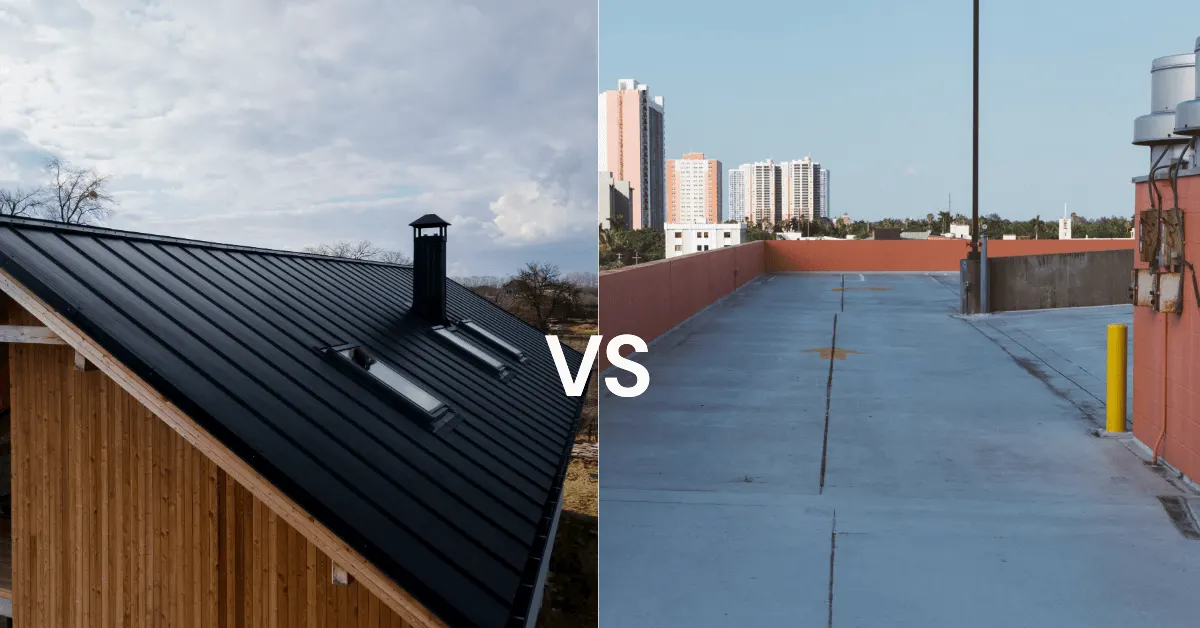
The roof is one of the most critical components of a building, providing protection against the elements and contributing to its overall aesthetic appeal. When it comes to roof design, there are two main options: flat roofs and pitched roofs.
Each type of roof has its own unique advantages and disadvantages, and the decision ultimately depends on the needs and preferences of the homeowner.
In this article, we will explore the overview, differences between flat roofs and pitched roofs and factors to consider when selecting the best roof for your building.
Flat Roof Design

Flat roofs are exactly what they sound like – roofs that are mostly level and have little to no pitch. They are a popular choice for commercial and industrial buildings, but can also be seen on some residential homes.
One of the main benefits of a flat roof is that it can be more cost-effective to install than a pitched roof, as it requires less material and labor. (But this also varies depending on the type.)
Flat roofs also offer more usable space than pitched roofs, which can be ideal for rooftop gardens, solar panels, or other outdoor areas.
However, flat roofs can be prone to leaks and require regular maintenance to prevent water from pooling and causing damage.
They also do not handle heavy snow loads as well as pitched roofs, which can be a concern in areas with heavy snowfall. Flat roofs can also have a shorter lifespan than pitched roofs due to their increased exposure to the elements.
Recommended read: 8 Types of Flat Roofs
Pitched Roof Design

Pitched roofs, on the other hand, are sloped roofs that have a higher point at the top and gradually slope downward towards the edges.
This design is more commonly seen on residential homes. One of the main benefits of a pitched roof is that it provides better water drainage, which can prevent leaks and water damage.
It is also more suitable for areas with heavy snowfall, as the slope allows snow to slide off more easily.
Pitched roofs can be more expensive to install than flat roofs, as they require more material and labor. They also do not offer as much usable space as flat roofs.
However, pitched roofs are often seen as more aesthetically pleasing and can add value to a home. They also provide better insulation, which can help keep homes cooler in hot climates and warmer in cooler climates.
Factors to consider when selecting a roof type
When deciding between a flat roof and a pitched roof, there are several factors to consider. First, consider the climate in your area.
Climate in your area
If you live in an area with heavy rainfall or snowfall, a pitched roof may be the better choice. If you live in a drier climate, a flat roof may be more suitable.
Next, consider the intended use of the roof.
Intended use of the roof
If you plan on using the roof for outdoor activities, such as a rooftop garden or solar panels, a flat roof may be the better choice. If the roof will primarily be used for insulation and protection from the elements, a pitched roof may be more suitable.
Finally, consider the cost and maintenance requirements.
Cost and maintenance requirements
Flat roofs can be more cost-effective to install, but may require more maintenance to prevent leaks.
Pitched roofs may be more expensive to install, but require less maintenance and provide better water drainage.
Frequently Asked Questions
- What are the main differences between flat and pitched roof designs?
Flat roofs are mostly level and offer more usable space, making them ideal for rooftop gardens or solar panels, but they require more maintenance and are prone to leaks. Pitched roofs have a sloped design that provides better water drainage, handles heavy snow better, and offers improved insulation, though they are generally more expensive to install.
- Which roof type is more cost-effective to install in Kenya?
Flat roofs tend to be more cost-effective to install because they require less material and labor. However, the overall cost can vary depending on the specific roof type and materials used.
- How does climate influence the choice between flat and pitched roofs?
In areas with heavy rainfall or snowfall, pitched roofs are preferable due to better water drainage and snow shedding. In drier climates, flat roofs can be suitable and offer additional usable space.
- Are flat roofs suitable for residential homes in East Africa?
Yes, flat roofs are used in some residential buildings and can be ideal for adding rooftop gardens or solar panels. However, they require regular maintenance to prevent water pooling and leaks.
- What maintenance considerations should I be aware of for flat roofs?
Flat roofs need regular inspections and maintenance to prevent water pooling, which can cause leaks and damage. Proper drainage systems and waterproofing are essential to extend their lifespan.
- Can a pitched roof add value to my home?
Yes, pitched roofs are often considered more aesthetically pleasing and can improve insulation, potentially increasing a home's value. They also require less maintenance compared to flat roofs.
Comments
Plain-text comments only — no links. Comments appear after verification.
Loading comments…